"An Answer to an Enquiring Brother" circa 1915 - Partisan piece written against F.W. Grant
Tunbridge Wells - Its Question Considered (Login Required)
In support of TW - A shame they focus their attention on the subsequent history of the KLC brethren, and avoid analysing the shameful first 10 years of the TWs in the UK.
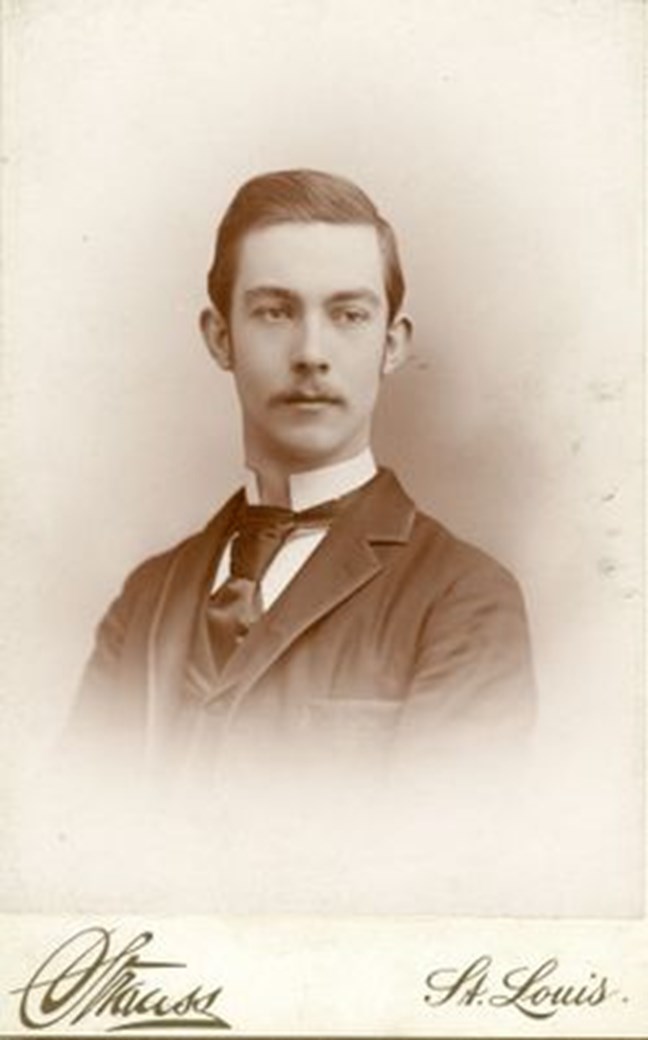
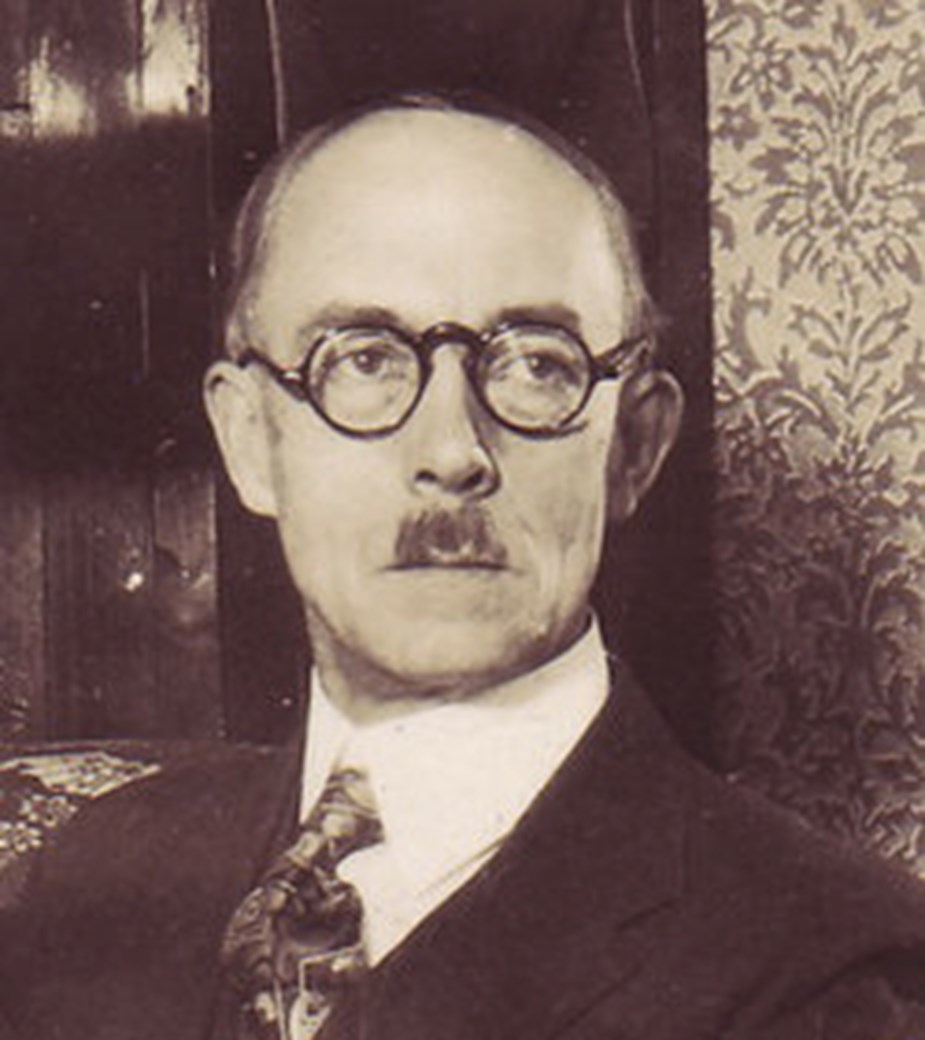
John Ruskin Gill (1873-1962) was the oldest of four children born to Alfred Gill (1846-1907) and Eleanor Bryson (1845-1909), the others being Frank Gill (1876-1955), Edith Gill Gunderson (1879-1972) and Edwin Gill (1884-1976). Ruskin was named after John Ruskin (1819-1900) who was England’s most famous art and culture critic of the time.
Alfred was born in Keighley, west Yorkshire, England. In March 1871, Alfred left Keighley as a single man for the US where he worked for two years in Boston and Minneapolis. In Aug 1872, Eleanor left England for Boston where she and Alfred were married 10 Sep 1872. They remained in the US till Mar 1873 when they returned to England and settled in Newcastle-on-Tyne where Ruskin was born. In 1875, they moved to the seaside village of Seaton Carew, 57 km south of Newcastle (where their next two children were born and where Alfred worked as a bank manager in nearby West Hartlepool), and then back to Newcastle in 1881 where their youngest child was born. They initially attended the Church of England but became restive under a new, more modernist minister. In 1879, they began attending an assembly of Brethren and stayed in the fellowship of Brethren for the rest of their lives.
In 1884, Alfred and Eleanor wrote the following lines to each other:
Ah, Ellie, my Dearest of Dears,
We’ve now proved God’s goodness in twelve married years.
Just see our trophies looking so grand,
Brought forth in England’s well-favoured land.
There’s Ruskin, first born, full of good fun,
Then pensive Frank, a most thoughtful son;
And Edith, the fair one, sparkling with life,
Plus winsome wee Eddie with intellect rife.
Oh Alfie, if we only the future could tell,
One hundred years on, will all be quite well?
Will our Saviour capture the heart of each soul?
What kind of offspring will make up the whole?
In Dec 1888, the whole family emigrated to the US where Alfred and Eleanor lived successively in Des Moines, Kansas City, St. Paul MI and Seattle. Alfred worked for the Great Northern Railway in St. Paul for 12 years and also laboured in the Lord’s work as an itinerant teacher and preacher among Brethren. It is said that the reason why Alfred decided to leave England was “a steadily declining income and very limited opportunities for his children to obtain a reasonable salary.” Commenting on a visit to Seaton Carew in May 1923, Ruskin said “It was with mixed emotions that I retraced the old familiar ways, remembering many little incidents of 40 years ago. How natural it would have seemed to have seen my beloved mother step out of the door!”
Ruskin worked as a commercial artist, engraver and amateur cartoonist. His grand nephew David Gill describes him as “a bit eccentric, funny [as he was given to humour], but deadly serious about maintaining Plymouth Brethren orthodoxy.” In 1901, he moved to Seattle for a job with an engraving company and started a gathering of Christians in his home which was the beginning of the Seattle assembly of Brethren.
In 1896, Ruskin married a Swiss immigrant named Emma Ramel (1872-1949) and had five children by her, namely, Gertrude Gill Jarvis (1899-1974), Sophia Gill Bourgeois (1902-1975), Sidney Gill (1906-1998), Ruth Gill Fletcher (1909-1990) and Winnifred Gill Kilcup (1915-1994). In Dec 1951, Ruskin married his second wife Harriet (“Hattie”) Finch Gill (1882-1969) and moved to where she was living in Endicott NY and where he lived for the rest of his life and is buried. The late Albert Hayhoe of Smiths Falls ON took his funeral.
Ruskin’s brother Frank (1876-1955) had a 49-year career working in the railroad industry and made a name for himself as an historian of the Union Pacific Railroad (UPR) through writing a series of well-researched articles about the UPR. Frank was also a teacher and preacher among Brethren. His son Walter Gill (1913-2004) worked as a cost accountant for Crown Zellerbach and edited the TW List of Gatherings for many years. Walter’s son David Gill (1946-) has written a lengthy biography of himself and the Gill family entitled “What Are You Doing About It? The Memoir of a Marginal Activist” (454 p., 2022), available from Amazon.
When the so-called Tunbridge Wells division among Brethren occurred in 1910, Ruskin sided with the Tunbridge Wells assembly who drew the support of virtually all the North American assemblies. As a result, in 1911 Ruskin started a periodical for the North American assemblies called “Notes of Interest to those gathered to the name of the Lord Jesus Christ.” This was intended as a partial replacement of the periodical called “Letters of Interest as to the Lord’s work” which continued to be published and which William Joseph Lowe had edited for many years who took the other side in the TW division. Some interesting accounts of gospel work among soldiers of the First World War are included in Notes of Interest. I have 9 of 13 issues of Notes of Interest that Ruskin put out between 1911 and 1919 and it ceased publication in 1922. Ruskin was also an historian of the Tunbridge Wells division and wrote a 29-page pamphlet about it called “Tunbridge Wells: Its Question Considered.”
During April to July of 1923, Ruskin made an extended trip to England and Europe to visit relatives and assemblies of Brethren, including those on the Lowe-Continental side of the TW division. He kept an extensive diary of his trip that runs to 47 typewritten pages in transcribed form. It’s a very interesting account and manifests his sense of humour. Commenting about the English practice of “afternoon tea,” he said “O! these English teas – how can they get away with so many meals? Always tea about 4:30 with mountainous piles of thin wafer-like bread heavily encrusted with butter, cakes and fruit.” He said that “Almost every man in England seems to smoke” and that “the upper decks of streetcars (“trams” they call them) are generally smoking infernos.” He spoke of the London gatherings of Brethren as “cold, formal and stiff,” but commended the gatherings in Cornwall for their “hearty response” to his preaching. On a visit to the Gregoire family in Paris, he said “Mme. Gregoire insisted on serving me my breakfast in bed, tho’ I did not at all want this. However, all my pleadings were overruled. One feels helpless in rebelling against her decisions – she pronounces them with such an air of finality. So these mornings the “bonne” (hired girl), after a perfunctory tap on the door, has walked in with my breakfast on a tray and has arranged it on a stand near to my head, and I have been compelled to accept it. This dear sister means it all very kindly, I know, even if she is a martinet!”
Ruskin also describes as follows in his diary an interesting incident that occurred at a meeting in Camborne, Cornwall:
“In the evening, I preached in the Public Assembly Room to 150-160, speaking along simple lines, primarily Gospel, with much liberty. At the close, the congregation was reluctant to disperse and we had much fervent singing. There was a sense of real power in the Word and in the singing and the prayers, and souls were apparently overwhelmed by it. At the conclusion of one hymn, a sister unable to restrain her feelings (she had been gagging herself with a handkerchief) called out ecstatically, ‘Praise the Lamb! Oh, Praise the Lamb!’ This rather took me aback, but [brother Will] Sibthorpe told me afterwards that such outbursts are not uncommon in the meetings where there is manifest Power, and that both men and women have been known to be so affected by it as to shout and clap their hands, sway their bodies, etc. He said one or two brothers have been known to jump in the air. One brother, Hart (well-named!), has been known to jump 4 feet in the air. Sibthorpe says he himself was shocked by such occurrences at first, but he has not seen any evil follow in their train and he deprecates harsh criticism concerning it. I am prepared to be slow to condemn, for beyond question these phenomena are connected with a real work of God, in felt power. I think I remember J.N.D. making allowance for features of this kind in connection with the great Irish revival of 1854.”
Ruskin describes a similar incident at an assembly prayer meeting in Camborne. During the meeting, “loud ejaculations of praise burst out from one or two women” and “a young woman (a sober, godly sister in fellowship) was so overcome that she began both to shout out hysterically and to clap her hands high above her head in a certain rhythm.” Another sister “who appeared to be in an ecstasy and who had been calling out praises to the Lord, got up from her seat and began to whirl around the room.” Brother Sibthorpe said that ‘these outbreaks have a tendency to disappear as souls become established, and in any case, they do not occur in the Worship Meeting.”
Ruskin also spoke about attending an assembly prayer meeting in Camborne and that an “unusual feature” of it was “the power that gripped our hearts and the impetuous force of the utterances poured forth before the Throne of Grace (‘poured forth’? – burst forth, I had better say!). Many brothers prayed, for there was great liberty but apparently as Spirit-led. Not the smooth, correctly-worded and mechanical prayers to which, alas! we are too much accustomed, but vehement, turbulent prayers – uncouth and poorly phrased – but coming (as one could feel) from the very depths of hearts profoundly stirred and acceptable to the Lord for the same reason. All this made me feel very much ashamed of my own poor cold heart. I could, no doubt, put words together more correctly than these dear brothers, but I know that with me there would not be the burning passion for souls, nor perhaps the vehement sincerity of desire to walk pleasing to God that ran out of these utterances. Dear, beloved saints – may they be kept in the power and freshness of this first-love to Christ.”
Ruskin remarked that during the progress of that same meeting, “such a pitch of excitement was attained to that some of the phenomena already described in these notes began to appear. “Loud ejaculations of praise burst out from one or two women” and “a young woman (a sober, godly sister in fellowship) was so overcome that she began both to shout out hysterically and to clap her hands high above her head in a certain rhythm.” Another sister “who appeared to be in an ecstasy and who had been calling out praises to the Lord, got up from her seat and began to whirl around the room.” Brother Sibthorpe said that ‘these outbreaks have a tendency to disappear as souls become established, and that in any case, they do not occur in the Worship Meeting.’”